
Autonomous Systems
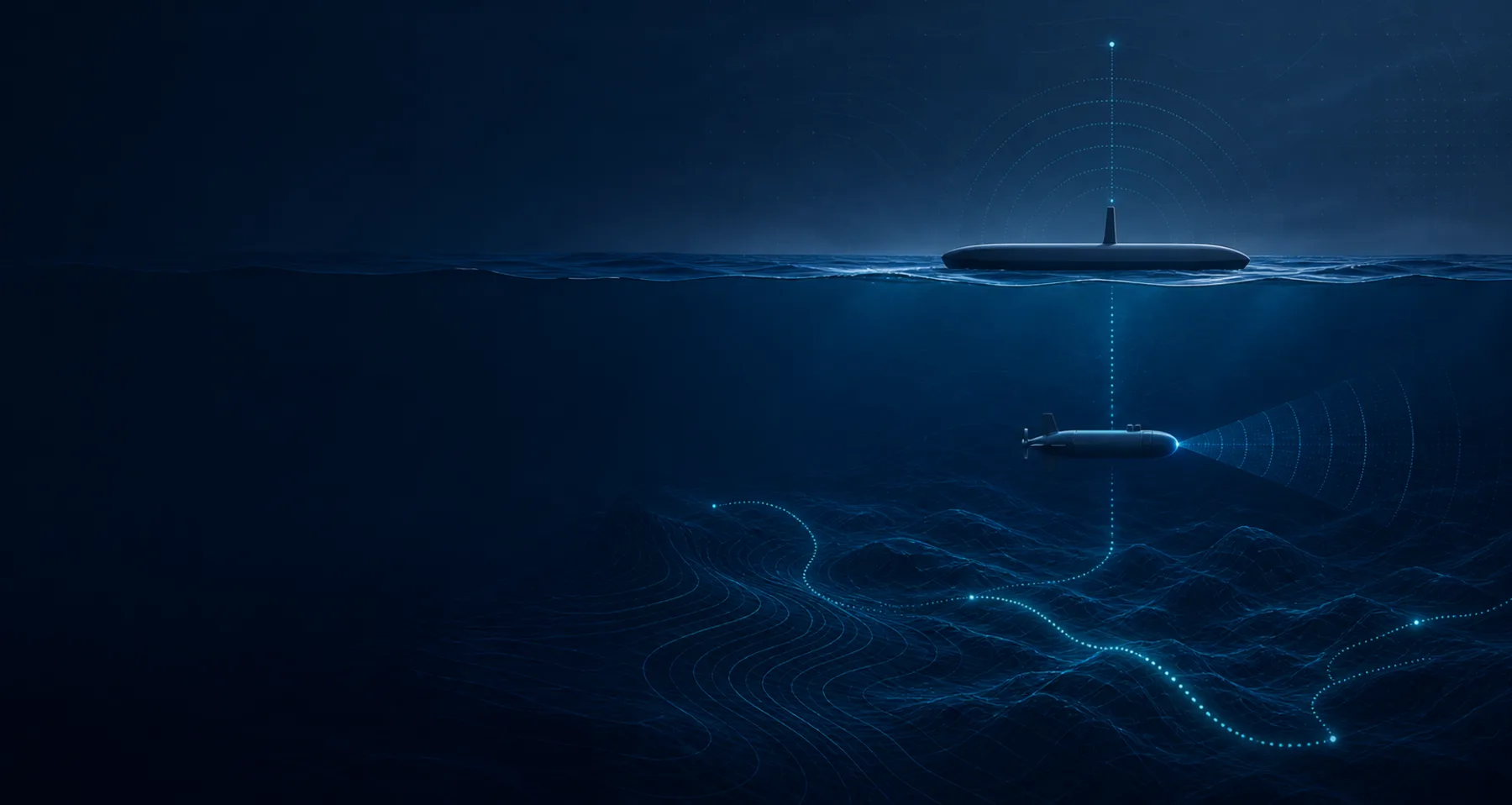
Concept architectures for surface and subsea robotic vehicles.
Keel is an ocean autonomy and maritime intelligence concept for persistent sensing, inspection and stewardship across coastal and offshore environments.
Autonomous sea drones · Ocean robotics · Maritime domain awareness · Blue economy intelligence
It carries trade, food, energy, climate stability and security. Yet most of it remains under-observed, under-instrumented and operationally fragmented.
Keel frames the ocean as a data, robotics and autonomy problem.
Platform
The concept connects candidate vehicle architectures, sensing payloads, mission software and human-approved intelligence workflows.
Concept architectures for surface and subsea robotic vehicles.
Sensor, mapping and monitoring workflows for maritime decision support.
Planning, tasking, telemetry and reporting concepts for remote ocean operations.
Use cases for conservation, resilience, infrastructure and long-horizon ocean capital.
Surface and subsea
The long-term opportunity is not a single drone. It is a coordinated maritime autonomy stack: vehicles, sensors, tasking, telemetry, data fusion and human approval.
Use cases
Potential applications span maritime domain awareness, offshore energy, underwater infrastructure, coastal resilience, conservation and port environments.
Maritime domain awareness is the operating picture of activity at sea. Keel frames it as a sensing, data fusion and human decision workflow, not a single sensor or dashboard.
Offshore wind assets sit in harsh, expensive and operationally complex environments. Autonomous maritime systems may help make inspection more persistent, repeatable and data-rich.
Subsea inspection is one of the clearest industrial use cases for ocean robotics. Underwater infrastructure is hard to access, expensive to survey and increasingly important to energy, data and trade.
Coastlines are where climate, trade, population, infrastructure and ecology collide. Persistent monitoring can help transform episodic observation into operational context.
Marine conservation often fails from lack of persistent, affordable and trusted observation. Autonomous sensing can help make protected waters more legible, but it should be paired with governance, science and local authority.
Ports are critical infrastructure. They need awareness across water, quay, vessel activity, restricted zones and underwater structures. Autonomous systems may support this picture, but human approval remains central.
Ocean intelligence
Keel's research surface is built around the transition from raw maritime data to trusted operating context.
Long-horizon capital
The blue economy sits at the intersection of infrastructure, climate resilience, defence-adjacent autonomy, energy, food security and data. Keel is designed as a research-first platform for understanding that frontier.
Nothing on this site is a financial promotion, investment advice, an offer to sell securities or a solicitation to invest.
Research
Practical guides to the categories Keel watches: autonomous sea drones, maritime intelligence, ocean robotics, inspection and blue-economy technology.
Private brief
Direct email: charlie@coxswain.uk